

Robotic vs Conventional Knee Replacement
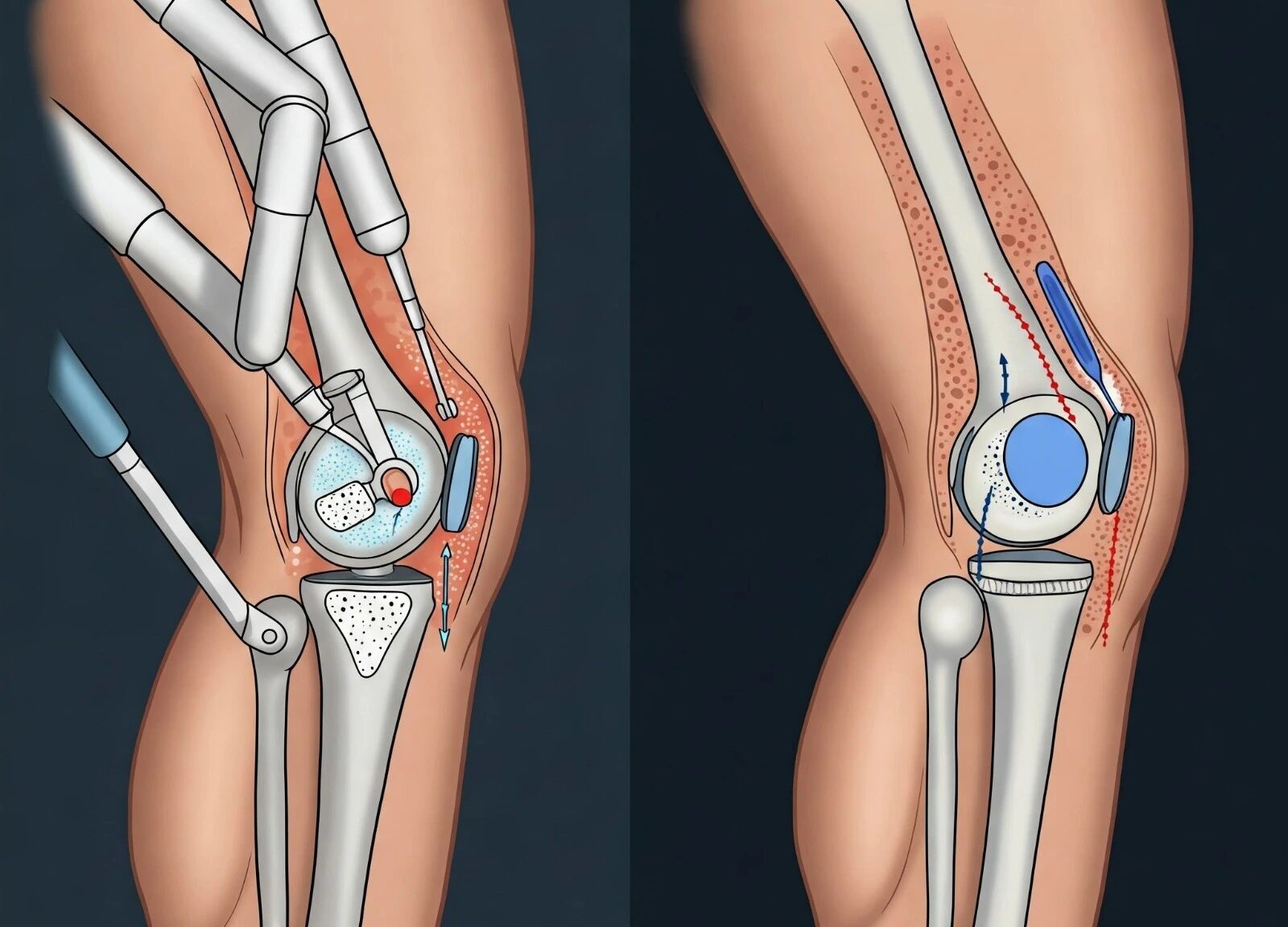
Knee replacement surgery has evolved significantly over the years, offering patients two major options Robotic Knee Replacement and Conventional Knee Replacement. Both procedures are widely used to treat severe knee pain caused by osteoarthritis, rheumatoid arthritis, and joint damage, but they differ in precision, technology, recovery, and outcomes.
An experienced orthopedic surgeon can assess your condition and recommend the most suitable surgical option based on joint damage, bone health, age, lifestyle, and medical needs.
Understanding the differences between robotic and conventional knee replacement helps patients make informed decisions about their treatment and recovery.
Robotic vs Conventional Knee Replacement

The major difference between robotic knee replacement surgery and conventional knee replacement surgery lies in the technology and level of precision used during the procedure.
| Factors | Robotic Knee Replacement | Conventional Knee Replacement |
| Technology Used | Robotic system with AI-assisted planning | Standard surgical instruments |
| Surgical Control | Surgeon-controlled with robotic assistance | Completely surgeon-controlled |
| Alignment Planning | CT-based calculation with AI support | Alignment calculated by surgeon |
| Precision | Higher precision and implant positioning | Depends on surgeon’s experience |
| Tissue Preservation | Lesser bony cuts and better tissue preservation | Comparatively larger bone cuts |
| Ligament Release | Lesser ligament release required | More ligament balancing may be required |
| Recovery | May support faster early recovery | Reliable recovery with rehabilitation |
| Planning | 3D imaging and computer-guided planning | Manual surgical planning |
In simple terms, robotic surgery enhances precision and surgical planning, while conventional surgery relies primarily on the surgeon’s expertise and experience.
Benefits of Robotic Knee Replacement vs Conventional Knee Replacement
Conventional knee replacement remains a trusted and widely performed procedure across the world, while robotic-assisted surgery offers advanced precision and planning.
| Robotic Knee Replacement | Conventional Knee Replacement |
| High-tech robotic assistance | Proven and widely performed procedure |
| Greater precision and alignment | Surgeon expertise-based approach |
| AI-assisted surgical planning | Cost-effective treatment option |
| Lesser bony cuts | Suitable for most arthritis patients |
| Lesser ligament release | Long-term successful outcomes |
| May support faster recovery | Widely available treatment |
| Suitable for complex cases | Reliable and effective procedure |
Suffering from knee pain or arthritis? Book a consultation today to know whether robotic or conventional knee replacement is right for you.
Risks and Limitations of Both Procedures
Both robotic and conventional knee replacement surgeries are considered safe, but like any major surgery, they carry certain risks, including:
- Infection at the surgical site
- Blood clots
- Implant loosening over time
- Pain and stiffness after surgery
- Need for physiotherapy and rehabilitation
Robotic surgery may reduce certain risks related to alignment and implant positioning, but overall success largely depends on the surgeon’s expertise, patient health, and post-surgery rehabilitation.
Recovery Timeline After Robotic vs Conventional Knee Replacement
Recovery after robotic knee replacement and conventional knee replacement depends on the patient’s overall health, age, and commitment to rehabilitation.
Robotic Knee Replacement Recovery
- Hospital stay: 2–3 days (average)
- Walking with support: Within 1 day
- Physiotherapy: Starts within 24 hours after surgery
- Return to normal activities: 4–6 weeks (varies)
Conventional Knee Replacement Recovery
- Hospital stay: 2–4 days (average)
- Walking with support: Within 1–2 days
- Physiotherapy: Starts immediately after surgery
- Return to normal activities: 6–8 weeks (varies)
Patients undergoing robotic knee replacement surgery may experience slightly faster early recovery due to improved precision, lesser bony cuts, and reduced ligament release. However, conventional knee replacement also provides excellent long-term outcomes when combined with proper physiotherapy and rehabilitation.
Get expert guidance from an experienced orthopedic surgeon and take the first step toward pain-free movement.
Conclusion
Both robotic knee replacement and conventional knee replacement are effective treatments for severe knee arthritis and joint damage. Robotic surgery offers higher precision, AI-assisted planning, lesser bony cuts, and improved alignment accuracy, while conventional surgery remains a reliable and cost-effective solution with proven long-term results.
The best choice depends on the patient’s condition, bone structure, lifestyle, and the surgeon’s recommendation. A detailed clinical evaluation is essential before deciding the most suitable surgical approach.
Frequently Asked Questions
Is robotic knee replacement surgery better than conventional knee replacement?
Robotic knee replacement offers higher precision and AI-assisted alignment planning, but both surgeries are effective depending on the patient’s condition and surgeon expertise.
What is the success rate of knee replacement surgery?
Both robotic and conventional knee replacement surgeries have a success rate of more than 90% when performed properly with appropriate rehabilitation.
Is robotic knee replacement surgery safe?
Yes, robotic-assisted knee replacement is considered safe and is widely performed, but the outcome still depends on the surgeon’s skill and experience.
Which knee replacement surgery has faster recovery?
Recovery after robotic knee replacement may be slightly faster in the early stages because of improved precision, lesser bony cuts, and reduced ligament release.
Who may need knee replacement surgery?
Patients with severe arthritis, chronic knee pain, stiffness, reduced mobility, or difficulty performing daily activities may require knee replacement surgery.
Disclaimer: The information shared in this content is for educational purposes only and not for promotional use.
