

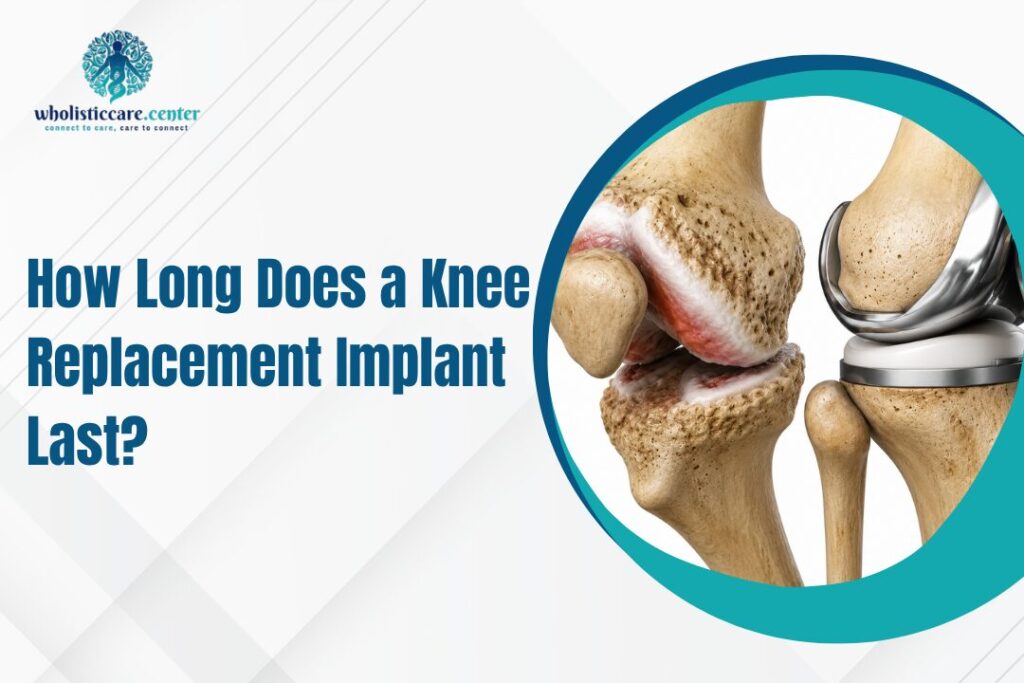
A modern total knee replacement implant lasts between 15 and 25 years for the majority of patients. Registry data across 14 national databases, published in The Lancet, found that approximately 82% of total knee replacements remain fully functional at the 25-year mark. That figure is higher than most patients expect, and significantly better than the 10-to-15-year estimates that were common a decade ago. Implant materials, surgical technique, and how well the patient manages their recovery all affect where in that range they land.
According to Dr. Saurabh Talekar, orthopedic surgeon in Kandivali, “The implant itself is only one part of the equation. I’ve seen patients in their seventies still on their original knee at 22 years with no issues. I’ve also seen younger, more active patients need a revision at 12. Body weight, activity level, and joint alignment at the time of surgery all play a role. Getting the implant right the first time is what gives patients the longest run.”
What Factors Affect How Long a Knee Replacement Lasts?
Not every patient gets the same lifespan out of their implant. Several variables shift that number up or down.
Patient age at surgery: Younger patients put more cumulative load on the implant over their lifetime. data consistently shows higher revision rates in patients under 60, not because the implant fails sooner, but because it simply gets used more. A 55-year-old active patient will stress the joint far more over 25 years than a 72-year-old with a moderate activity level.
Body weight: Every kilogram above the recommended range adds disproportionate force across the knee joint with each step. Higher BMI accelerates wear on the polyethylene bearing surface, which is the component most likely to require attention over time. Weight management before and after surgery directly extends implant life.
Activity type: Knee replacements tolerate walking, swimming, cycling, and light hiking well. High-impact activities like running, jumping, or heavy squatting wear the bearing surface faster. Patients who modify their activity appropriately post-surgery consistently show better long-term implant survival in registry follow-up.
Surgical precision and alignment: Implant positioning within even a few degrees of suboptimal alignment increases edge loading and uneven wear. This is one area where robotic-assisted surgery has shown measurable advantage — tighter placement accuracy translates directly into more even load distribution and longer implant survival.
Implant material and design: Modern cemented implants using highly cross-linked polyethylene bearings significantly outperform older designs. The survival rates in current data reflect newer implant generations. Earlier estimates of 10 to 15 years were based on materials that have largely been replaced. For those weighing their options, understanding knee replacement in detail before surgery helps set realistic expectations.
When Is a Revision Surgery Needed?
Most implants don’t fail dramatically. Wear is gradual, and revision is planned rather than emergency.
Progressive loosening: The most common reason for revision. The cement or bone-implant interface gradually weakens over many years, causing pain that worsens with activity. X-rays show characteristic changes around the implant edges before symptoms become severe.
Bearing surface wear: The polyethylene component between the metal parts wears down over decades. Modern cross-linked polyethylene has dramatically reduced this, but very active patients or those with implants from an earlier generation may eventually need the bearing exchanged — a less extensive procedure than full revision.
Infection: Deep joint infection can occur years after surgery, sometimes without an obvious source. Pain, swelling, warmth, or persistent stiffness in a previously well-functioning knee needs urgent evaluation. Infection-related revision is not related to implant wear but remains one of the more serious complications of joint replacement.
Instability or fracture: Ligament imbalance or a periprosthetic fracture around the implant may require surgical correction. These are less common but can occur, particularly after a fall or significant impact. Understanding what early warning signs look like is just as important as knowing the surgery itself this connects directly to recognising knee pain patterns that need attention.
Why Choose Dr. Saurabh Talekar for Knee Replacement Surgery
Dr. Saurabh Talekar holds MRCS from the Royal College of Surgeons of Edinburgh with fellowships in adult hip and knee replacement and minimally invasive spine surgery. Patients arrive after being told elsewhere they need early revision. Often the problem traces back to the first surgery. Implant selection. Alignment. A rehab plan that didn’t get followed through. Those decisions at the start are what separate someone still on their original knee at 20 years from someone back in theatre at 12. To discuss a planned replacement or an existing implant that isn’t performing as expected, speak with Dr. Saurabh Talekar directly.
📞 Call Now: +91 9136363669
FREQUENTLY ASKED QUESTIONS
Is a knee replacement permanent?
No. But 82% of total knee replacements are still functioning at the 25-year mark, which is longer than most patients expect.
What causes a knee implant to fail early?
High body weight, age under 60 at surgery, poor implant alignment, and sustained high-impact activity are the main contributing factors.
Can a failed knee replacement be redone?
Yes. Revision surgery addresses worn or loose components and restores function in the majority of cases.
Does robotic surgery make knee replacements last longer?
It improves placement accuracy, which means the implant wears more evenly. That directly affects how long it survives.
References
- PMC — Patient relevant outcomes of unicompartmental versus total knee replacement: systematic review and meta-analysis. https://pmc.ncbi.nlm.nih.gov/articles/PMC6383371/
- PMC — Factors affecting revision, patient-reported outcome and satisfaction following unicompartmental knee replacement. https://pmc.ncbi.nlm.nih.gov/articles/PMC4164911/
