

How Soon Can You Return to Normal Activity After Robotic Knee Replacement?
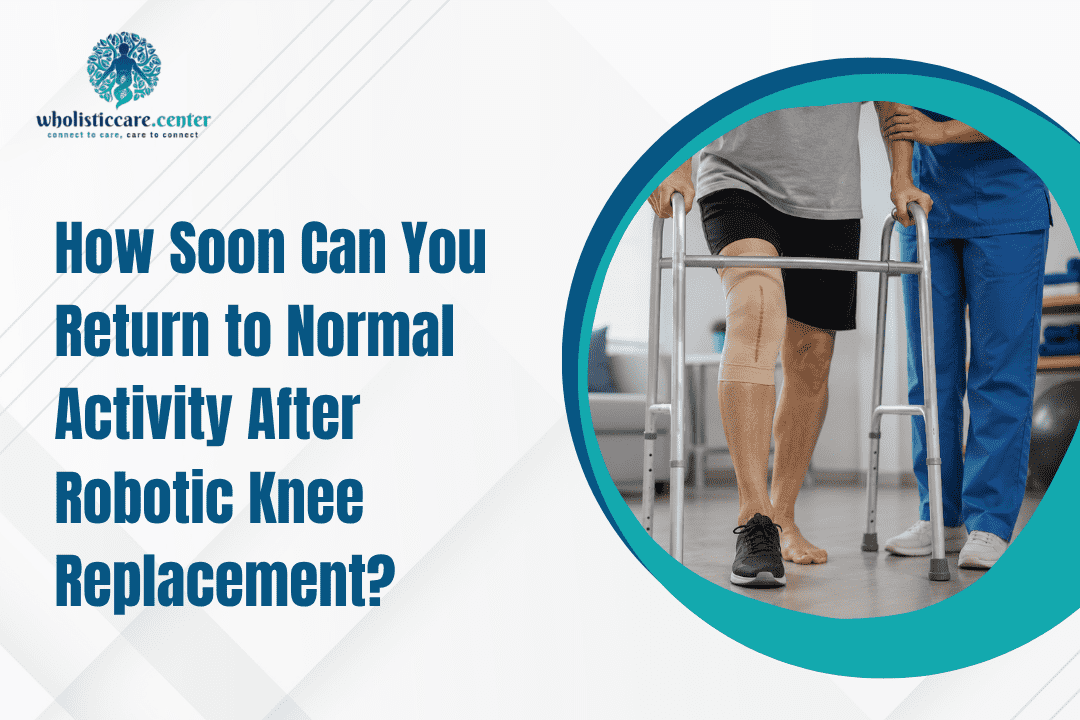
Light daily activities such as desk work or short errands usually return within three to six weeks after robotic knee replacement. Robotic guided precision tends to support faster early mobilization than conventional surgery though the real gains show up mostly in those first few weeks. A full unrestricted return to longer walks, driving and low impact sport generally takes three to six months and comes down to muscle strength, overall health and how seriously physiotherapy is followed. Pushing activity before the tissue and bone have actually healed is still the biggest reason recovery gets derailed.
According to Dr. Saurabh Talekar, orthopedic surgeon in Kandivali, “Patients often ask when they can return to normal life. Recovery isn’t a single date on a calendar. It’s a gradual curve. Early milestones like walking without support come quickly with robotic precision. The final stage is different though, full confidence in the knee for stairs, sport and long days on your feet. That part takes patience and consistent rehabilitation.”
What Determines How Fast You Recover After Robotic Knee Replacement?
Recovery speed isn’t random. A few key factors shape how quickly patients actually regain mobility.
Surgical Precision: Robotic guidance maps the knee’s exact anatomy before any incision is made. Less soft tissue disturbance during surgery generally means less swelling afterward.
Pre Surgery Fitness: Patients who walk, stretch and strengthen their quadriceps beforehand tend to recover faster. Prehabilitation isn’t an optional add on, it’s often the strongest predictor of the first month.
Age and Bone Health: Younger patients and those with stronger bone density tend to progress through milestones sooner. Older patients are equally capable of good outcomes though recovery simply takes a little more time.
Physiotherapy Compliance: Missed sessions or incomplete home exercises slow progress more than most patients expect. Consistent guided physiotherapy is what actually translates surgical precision into real functional mobility.
Robotic precision sets the stage but recovery is built day by day with the right guidance. Learn more about how robotic knee replacement is planned and performed at every stage.
What Does the Return to Activity Timeline Actually Look Like Week by Week?
Recovery unfolds in stages regardless of how well the surgery itself went.
First Two Weeks: Walking with support, managing swelling and basic range of motion work take priority here. Most patients are moving without support by the end of week two to three and strong pain medication is usually stopped around day ten.
Three to Six Weeks: Light daily activity starts coming back during this period. Desk work, short errands and cooking become manageable. Driving typically follows around four to six weeks once the knee feels controlled and reflexes feel reliable.
Two to Three Months: Stairs and longer walks become noticeably easier and mild household tasks stop feeling like a challenge. Muscle strength around the knee keeps building steadily through this stage.
Three to Six Months: This marks full functional return including unrestricted walking, travel and extended time on your feet. Low impact sports are typically possible around this point though exact timing varies from patient to patient.
Knowing how long your recovery takes matters just as much as knowing how long the implant itself will hold up. We have covered how long a knee replacement implant lasts in detail for patients planning ahead.
Why Choose Dr. Saurabh Talekar for Robotic Knee Replacement?
Dr. Saurabh Talekar brings years of dedicated experience in joint replacement surgery, supported by an MRCS from the Royal College of Surgeons of Edinburgh and a fellowship in adult hip and knee replacement. His approach to robotic knee replacement focuses on precise implant alignment and minimal soft tissue disruption, working alongside a dedicated physiotherapy team so that surgical planning and recovery planning move together from the outset.
This combination of surgical precision and structured rehabilitation is associated with faster early mobilization and a lower likelihood of postoperative complications. Patients recovering under his care are guided through each stage of the return to activity timeline with clear, realistic expectations. Call +91 9136363669 to book your consultation.
FREQUENTLY ASKED QUESTIONS
How soon can I walk without support after robotic knee replacement?
Most patients are walking without support within two to three weeks of surgery.
When can I resume driving after robotic knee replacement?
Driving typically resumes around four to six weeks once knee control and reflexes feel reliable.
Is robotic knee replacement recovery faster than conventional surgery?
Early mobilization tends to be quicker with robotic guidance though outcomes at one year are broadly similar.
When can I return to sports after robotic knee replacement?
Low impact sports are generally possible between three to six months depending on recovery progress.
References
https://pubmed.ncbi.nlm.nih.gov/29954217/
https://pubmed.ncbi.nlm.nih.gov/36801477/
Disclaimer: This blog is for general educational purposes only and does not replace a clinical evaluation. If you experience unusual pain, swelling or restricted movement during recovery, consult a doctor promptly.
